Build Products That Think, Learn, and Grow With Your Business.
Book a Free AI Workshop

You've got a product idea, or an existing product that's falling behind. Maybe you've been thinking about it for months. Maybe you've already tried building it once and it didn't go the way you hoped.
The problem is rarely the idea. It's usually what happens between the idea and the finished product, the wrong technology choices, a development team that builds what you ask for rather than what you actually need, or AI bolted on as an afterthought instead of built in from the start.

We do it differently. At Square Root Solutions, AI Led Product Engineering means AI is part of the architecture from day one, not added in later to tick a box. Whether you're starting from a blank page or improving a product that's already live, we build things that work in the real world, for real users, and keep getting better over time.
We are an ISO 42001 certified AI partner, meaning every product we build meets the international standard for responsible, audited AI management. Your users, your data, and your reputation are in safe hands.

Years of Experience
Platform Users
Projects Delivered
Tech Engineers
AI Solutions Deployed
Most software development companies will take your brief and build exactly what you describe. That sounds fine until you realise the brief was missing something, the technology chosen doesn't scale, or the AI features were treated as a module to plug in rather than a foundation to build on.
An AI-powered product isn't just a regular product with a chatbot added. The architecture is different. The data strategy is different. The way features are prioritised is different. And the way the product improves over time is completely different.
That's what AI Led Product Engineering means. It's not a label we apply to projects. It's a way of building that puts intelligent, adaptive functionality at the core of everything, so your product doesn't just launch, it learns.

Let's spend 30 minutes looking at it together. No pitch, just an honest conversation.
We follow a structured approach that keeps you informed and in control at every stage, without slowing things down.

Before a single line of code is written, we spend time understanding what you're actually trying to build and why. Who are the users? What problem does this solve for them? What does success look like in 6 months, and in 3 years?
This isn't a tick-box exercise. It's where we catch the things that would cause problems later, unclear user journeys, conflicting feature priorities, technical assumptions that don't hold up, and address them before they cost time and money.
This is what sets AI Led Product Engineering apart from standard development. Before we design the product, we define where AI creates the most value for your users and your business. Which decisions should AI make automatically? Where does AI assist a human rather than replace them? What data does the product need to learn from, and how will that data be collected and managed responsibly?
We design the architecture around those answers, not the other way around.
We build a working prototype of the core product experience, just enough to put in front of real users or stakeholders and test the key assumptions. This stage exists to confirm we're building the right thing before we commit to building all of it.
With the architecture defined and the prototype validated, we move into full development. Our engineering team builds in focused, iterative cycles, delivering working features on a regular cadence rather than disappearing for months and emerging with a finished product. You see progress throughout.
Every feature is tested thoroughly before it ships, including the AI components, which go through additional validation to ensure they behave accurately and fairly across different user types and scenarios. We manage the launch process end to end.
A product launch is not the end of the project. It's where the real learning begins. We monitor how users interact with the product, how the AI models are performing, and where the next improvements should focus. Your product gets better the more it's used.
We work across two types of engagements, and many projects combine both.

You have an idea for a product that doesn't exist yet, or not in the form you're imagining. We take it from concept through architecture, development, and launch, with AI built into the foundation.
You have a product already live, but it's manual where it could be automated, slow where it could be instant, or generic where it could be personalised. We identify where AI creates the most value and integrate it cleanly into your existing architecture.
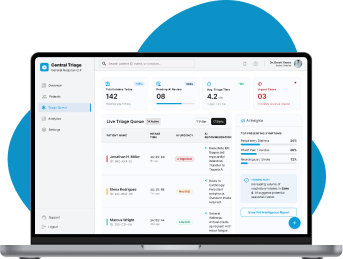
A private healthcare provider was managing patient intake entirely through phone calls and paper forms. Administrative staff were spending hours each day manually collecting patient information, checking it against records, and routing patients to the right department or specialist. Wait times were long, errors were common, and staff had little time for anything beyond data entry.
We built a patient intake platform with AI at its core. Patients complete a structured digital intake form, and the AI cross-references their responses against medical history, flags potential urgency indicators, and recommends the appropriate care pathway before a staff member is even involved. Staff review the AI's recommendation and confirm or adjust the routing.

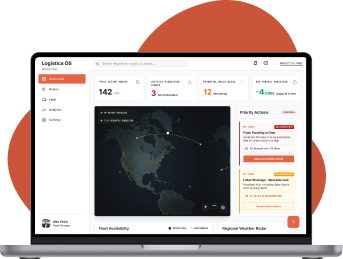
A logistics company managing freight across multiple routes was operating reactively. Delays, vehicle issues, and scheduling conflicts were identified only after they had already caused disruption. Operations managers were spending most of their day firefighting rather than planning, and the business was losing money on missed delivery windows and emergency rebooking costs.
We built an AI-powered operations dashboard that pulls data from vehicles, routes, suppliers, and weather systems in real time, and uses predictive models to flag likely delays or disruptions hours before they occur. The system suggests alternative routes or scheduling adjustments and alerts the relevant operations manager to act.

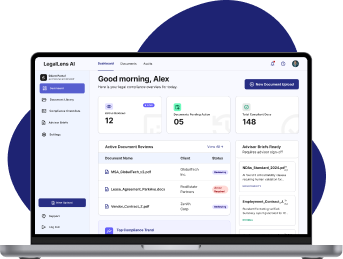
A professional services firm handling contracts and compliance documentation for business clients relied on senior staff to manually review every document submitted by clients, check for completeness, identify issues, and prepare a summary before any advisor could begin their work. This created a bottleneck: advisors were waiting on document reviews, clients were waiting for responses, and senior staff were stretched across too many reviews at once.
We built a client-facing portal where clients upload documents directly. The AI reviews each document on upload, checks completeness against a configurable checklist, flags issues or missing information with plain-language explanations, and generates an internal summary for the assigned advisor. Advisors receive a ready-to-use brief rather than a pile of raw documents.

You'll never be left wondering what's happening with your project. From the first discovery call to the day your product goes live, and beyond, we keep communication straightforward and consistent.
We bring the technical expertise; you bring the business knowledge. Decisions are always made together, not handed to you after the fact.

We work in short development cycles, delivering working features throughout the build, not one big reveal at the end.

If something won't work the way you've imagined it, we'll tell you early and suggest a better approach. We'd rather have that conversation upfront than deliver something that misses the mark.

The product will evolve, the AI models will improve, and user needs will change. We build relationships that last beyond go-live.

We've spent over a decade building software and the last several years building AI into that software. We know where the two meet, and where they clash.
That means our approach to AI development meets internationally audited standards for safety, transparency, and responsible use. Not every development company can say that.
Whatever your product needs, across mobile, web, data infrastructure, orAI modelling, the expertise is in-house.
Scale doesn't faze us. Whether your product launches to 500 users or 5 million, we build it to handle growth from the start.
Not at all. Most of our clients are business owners or product owners, not engineers. We translate the technical side into plain language throughout the project so you can make informed decisions without needing to understand the code.
Yes. We regularly collaborate with in-house teams, either leading the AI engineering workstream or working alongside existing developers on specific parts of a product.
It depends heavily on the scope. A focused MVP (minimum viable product) with core AI features typically takes 3 to 5 months. More complex platforms take longer. We'll give you a realistic timeline after the discovery phase, not a guess upfront.
Product ideas almost always evolve during development, and that's healthy. Our iterative approach is designed to accommodate changes without derailing the entire project. We review priorities regularly and adjust the roadmap as needed.
As an ISO 42001 certified company, we follow a structured framework for responsible AI development covering data privacy, model transparency, and risk management. We'll walk you through exactly how this applies to your product during the discovery phase.
You have an idea, or a product that could be so much more. Either way, the next step is a conversation. No jargon, no sales pressure, just an honest look at what's possible and what it would take to get there.
